

1. Make Sure Your App is Running Locally
Your app needs to be running on your machine for the ERP Cloud to load it. If it’s not already running, start it based on your setup:- From Template
- React + Node.js
- React + .NET
- React + PHP
2. Open the ERP Cloud
Go to ERP Cloud and log in. You’ll see the ERP-App dashboard. This is where your app runs inside the ERP interface.3. Find your App in the Sidebar
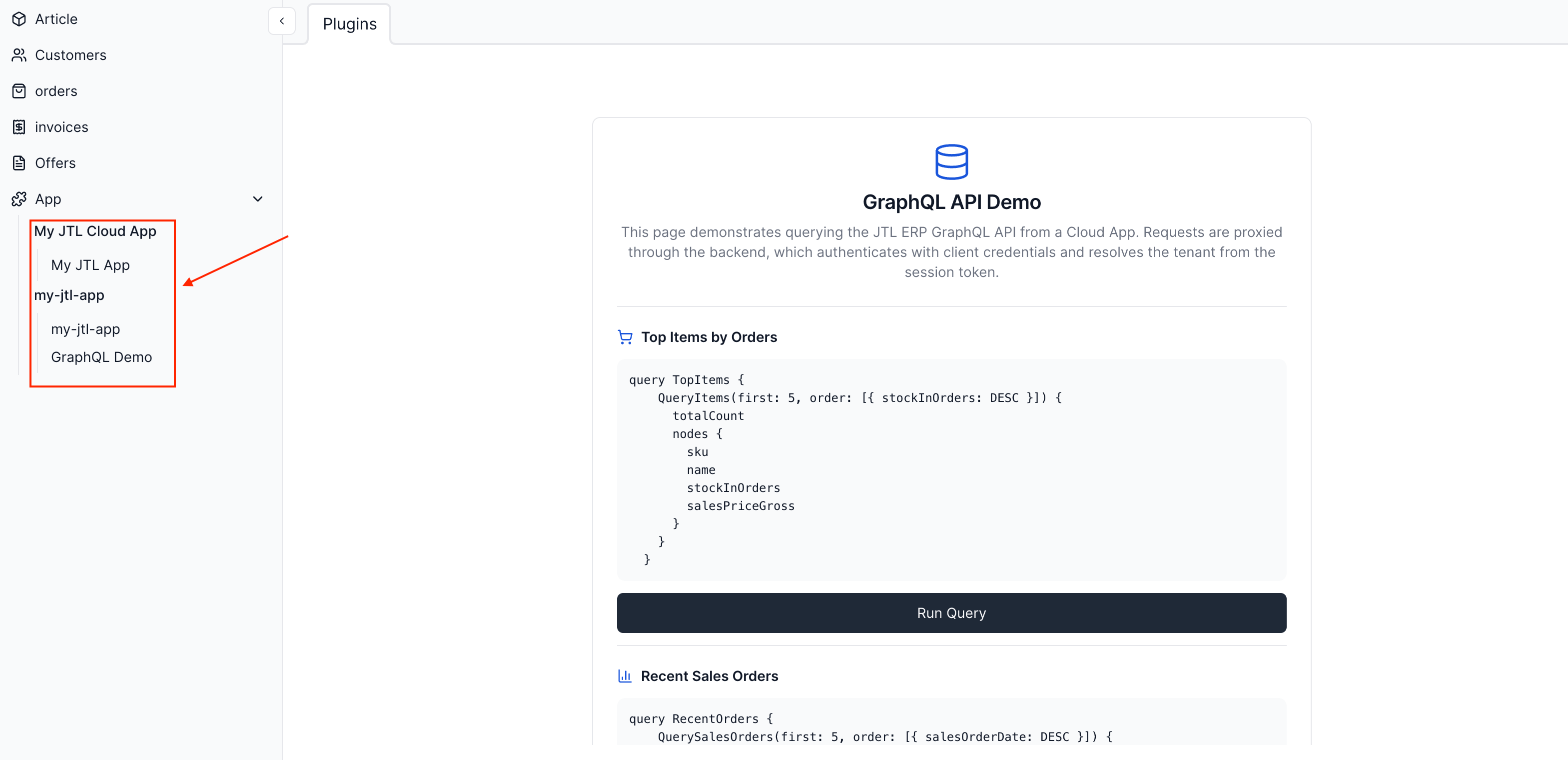
In the ERP sidebar, scroll down to the App section. You should see your app listed by the menu item name you set when you registered your app: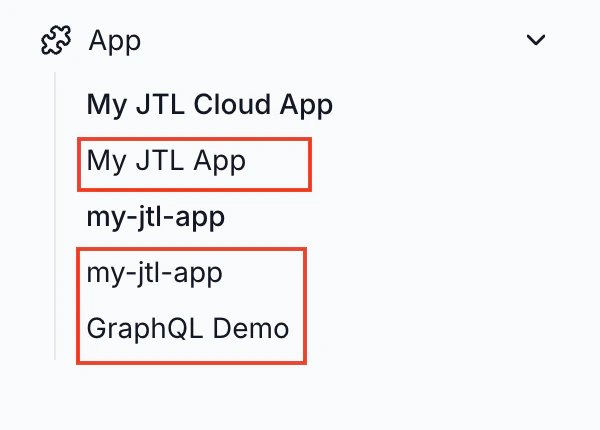
app.json:
- From Template
- From Scratch
The template ships an
app.json, and the CLI registers it for you:name is what appears in the sidebar, and the url is the matching route in your app.
4. Click your App
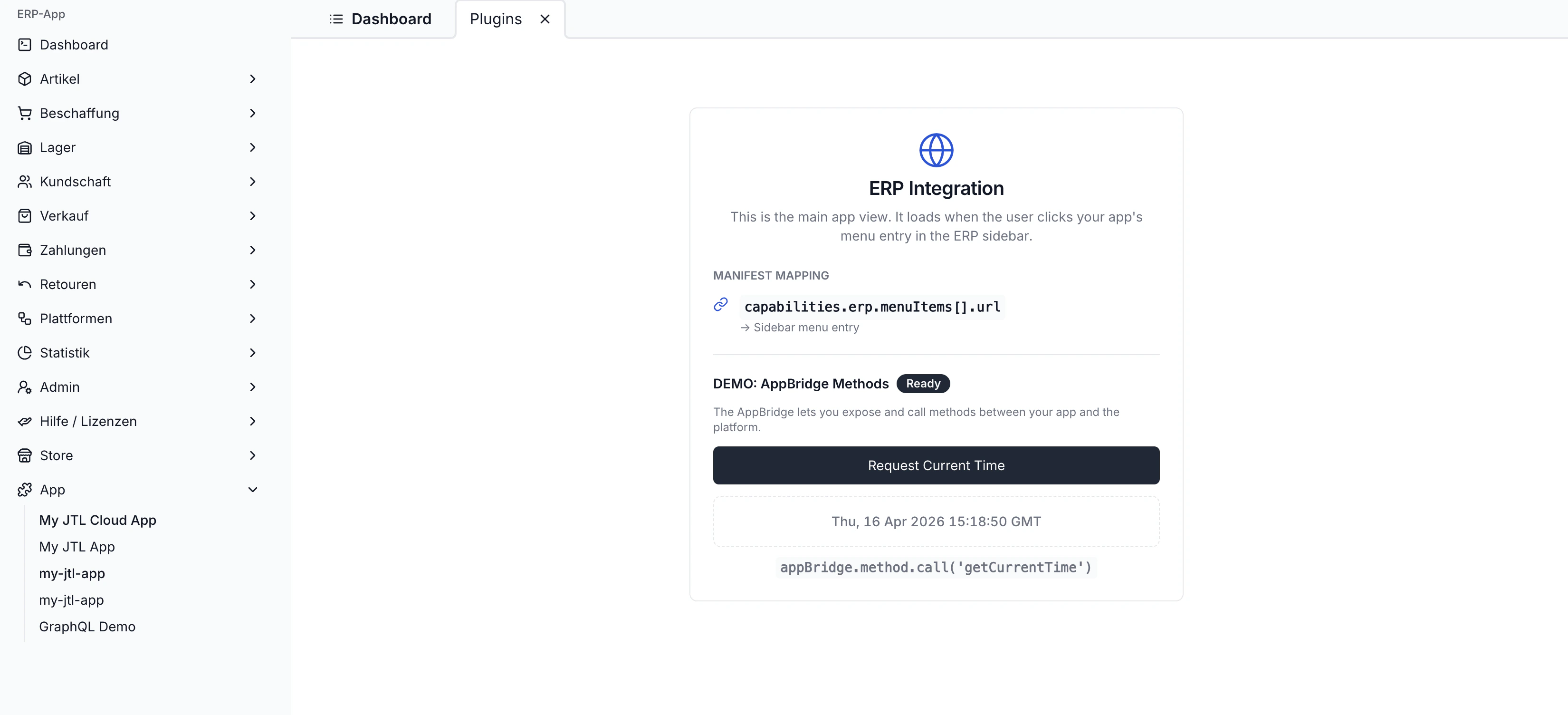
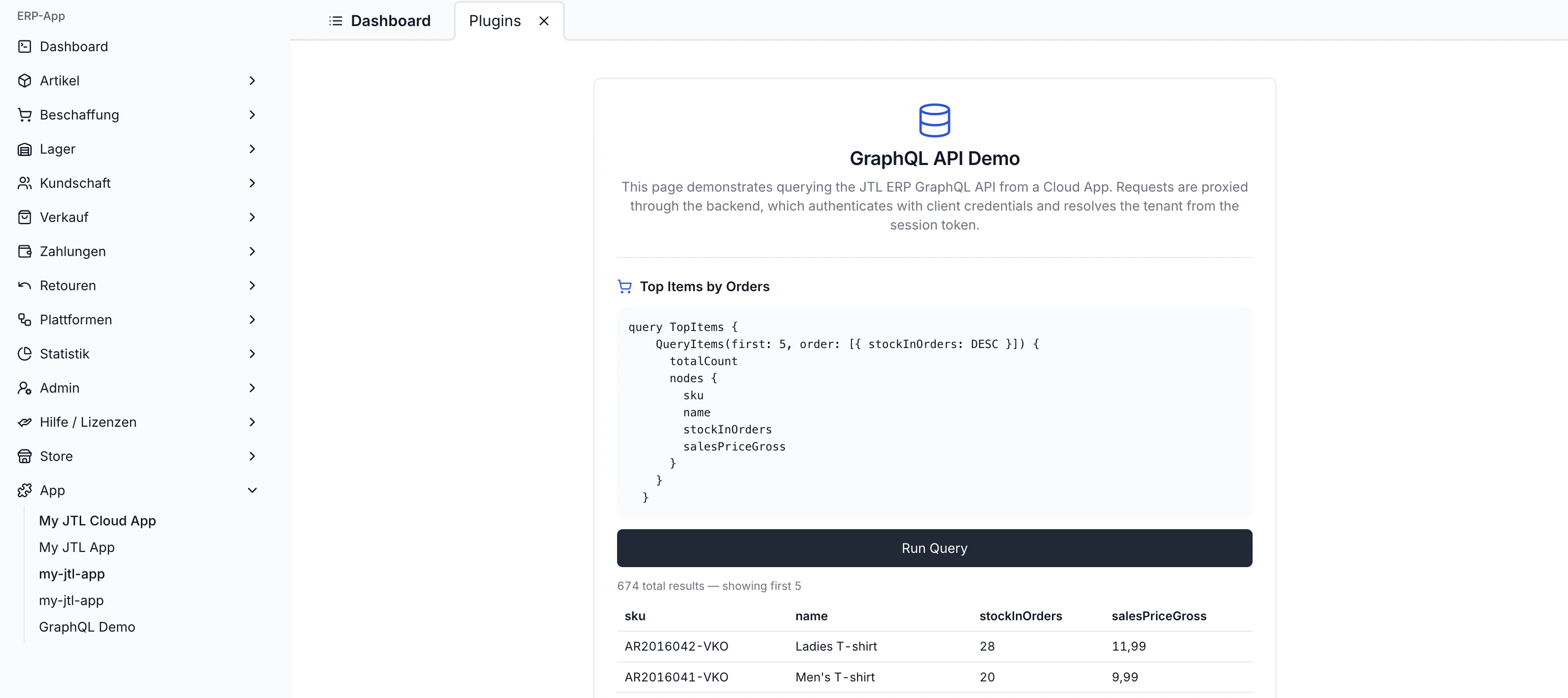
Click your app’s menu item in the sidebar. The ERP loads your/erp page inside its main content area and shows the items from your JTL-Wawi.
From Template App:
/my-jtl-app
/graphql-demo
5. Verify the Connection
Your app is working correctly if:
If any of these fail, check the troubleshooting section below.
How it All Connects
Here’s what happens under the hood when you click your app: Your app is extending the ERP Cloud. It sits alongside the built-in modules (Articles, Customers, Sales, Stock, etc.) in the sidebar and has the same access to merchant data through the JTL-Wawi API. The only difference is that built-in modules are native, and your app loads from your URL via the App Shell.Troubleshooting
App shows a blank page or loading spinner in the ERP
App shows a blank page or loading spinner in the ERP
- Is your local dev server running? The ERP loads your app from
localhost. - Check the menu item URL you configured during registration. Does the path match your running app?
- Open browser DevTools (F12) → Console tab. Look for errors.
- If you see a mixed content warning, make sure your URL protocol (HTTP vs HTTPS) matches what the ERP expects.
'Connecting to JTL Platform...' spinner stuck (From Scratch)
'Connecting to JTL Platform...' spinner stuck (From Scratch)
The AppBridge provider can’t connect:
- If your app isn’t running inside the App Shell, it won’t work in a standalone browser tab
- Check terminal output for backend errors
- Verify
CLIENT_IDandCLIENT_SECRETin your.env/.env.local - Restart the dev server after changing environment variables
App loads but shows an error
App loads but shows an error
- 401 / Authentication error: Your client credentials are wrong or expired. Regenerate them in the Partner Portal.
- CORS error: Your backend might not be accepting requests from the ERP’s origin. Check your API route’s response headers.
- Network error: The ERP can’t reach
localhost. Make sure no firewall or VPN is blocking local connections.
What’s Next?
Your app is running inside the ERP Cloud. From here:Publish to the App Store
Ready to ship? Create your App Store listing and submit it for review.
App Shell & UI Integration
Go deeper with the App Shell: add panel views, custom tabs, and ERP
context integration.